
Guide
For calm styles like Yin and Hatha, you need loose, warm clothing because you remain in one position for a long time and cool down. For dynamic styles like Ashtanga or Vinyasa, you need close-fitting, stretchy pieces that won't slip when you move. The material also makes a difference in both cases.
Which material is suitable for yoga clothing?
The material must be able to do two things: stretch and wick moisture away from the skin. A third factor, underestimated by many, is grip.
On slippery polyester, feet, knees, and forearms tend to slide. In tree pose or crow pose, this will cost you the position. Natural fibres have a rougher surface and provide grip without you having to grab the mat.
We work with TENCEL™ Modal. The fibre is derived from beech wood and produced in Austria. It absorbs moisture, dries quickly, and is slower to take on odours than polyester. So you don't have to wash an item after every session.
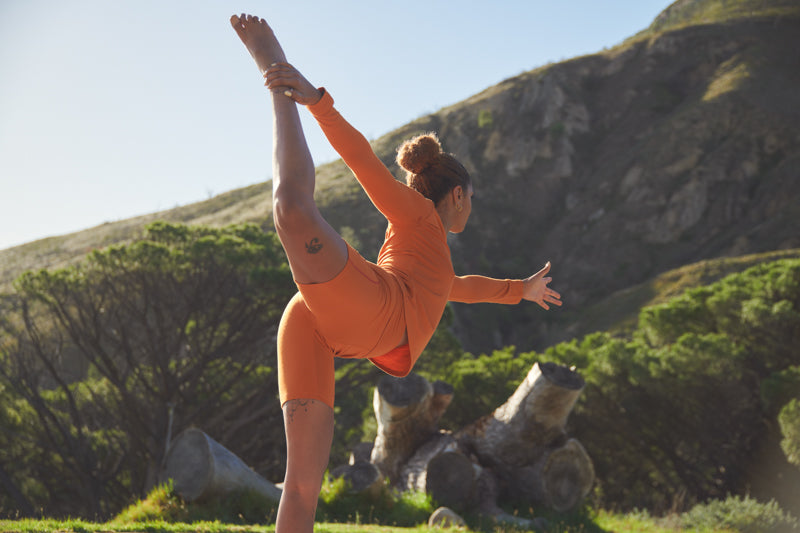
Which cut suits which yoga style?
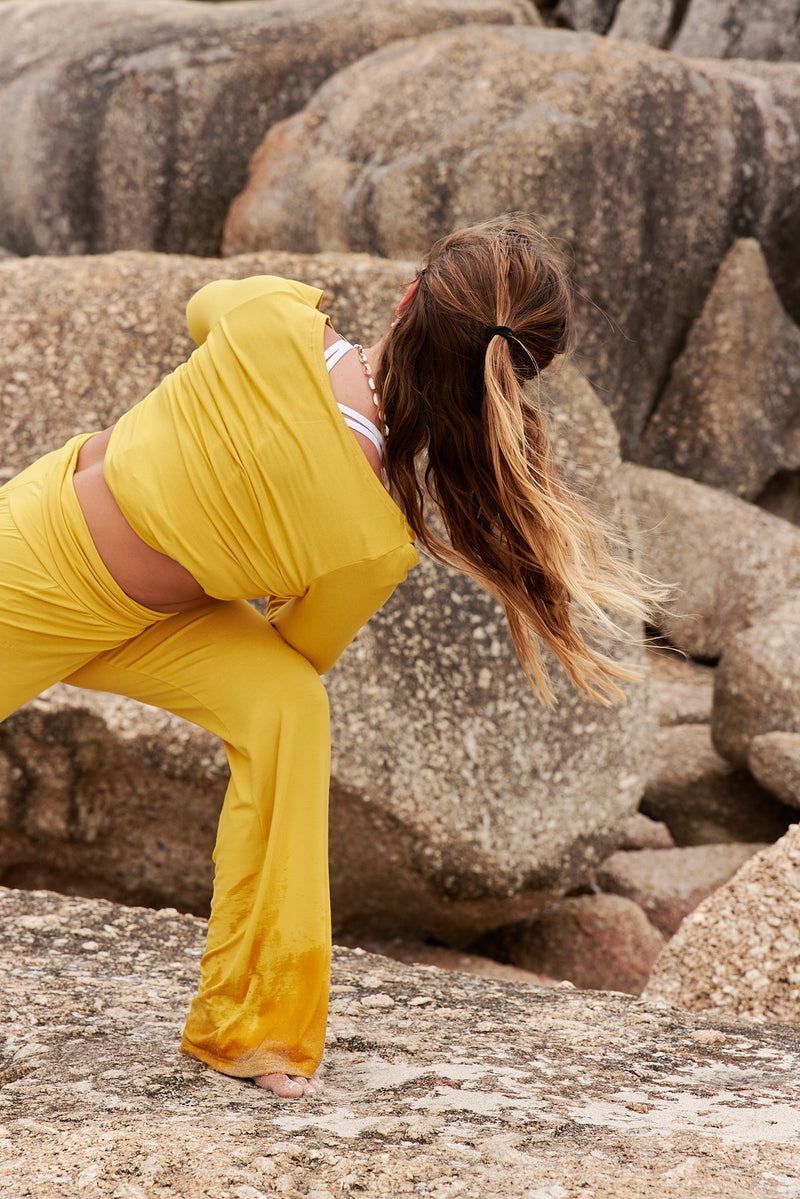
Loose, warm, in layers
In Hatha and Yin, you hold positions for several minutes. The body works little, and the temperature drops. Loose trousers and a relaxed top are ideal here, plus something to put on for final relaxation.
Tight leggings tend to be more distracting in these styles because you feel pressure on the waistband when sitting for long periods.
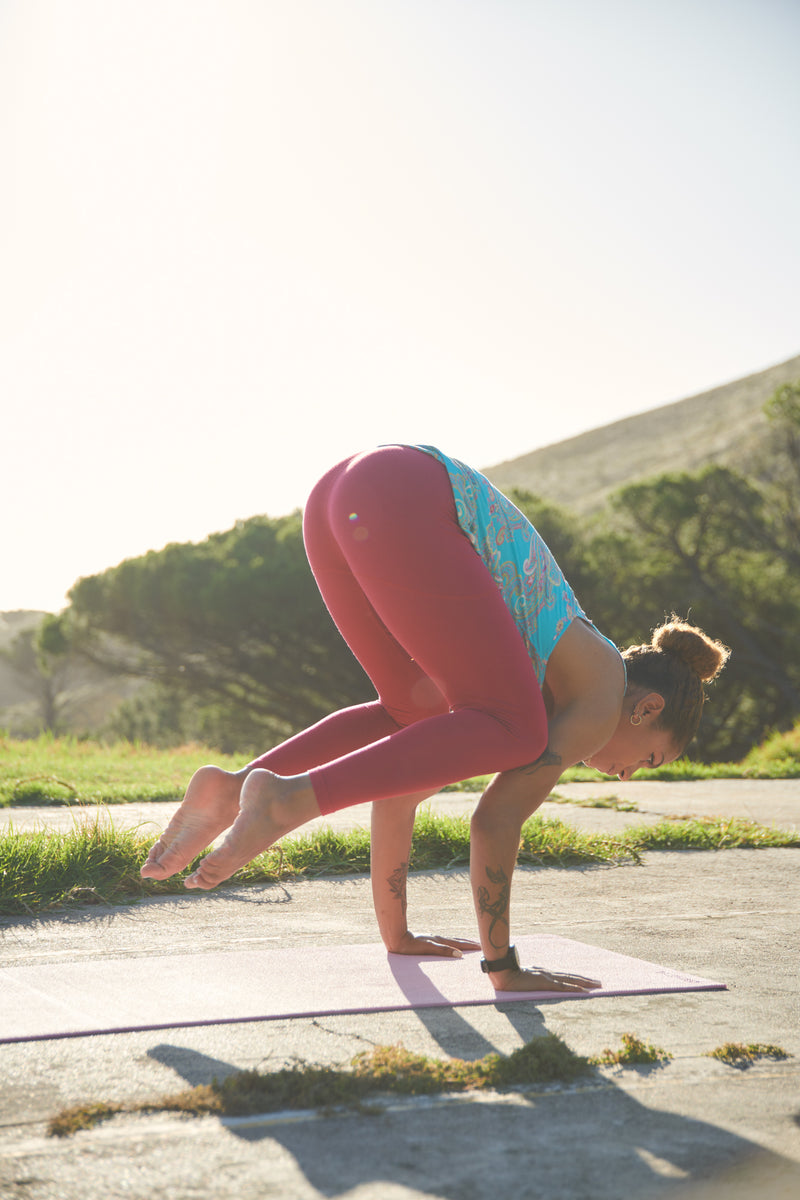
Close-fitting and stretchy
Nothing should get in the way during fast sequences. In downward dog, a loose shirt slips down; in inversions, even more so. Closer-fitting garments stay where they are.
Make sure the leggings are double-layered in the crotch and hip area. Otherwise, they become transparent when you bend, and you'll be thinking about that during practice instead of your breath.
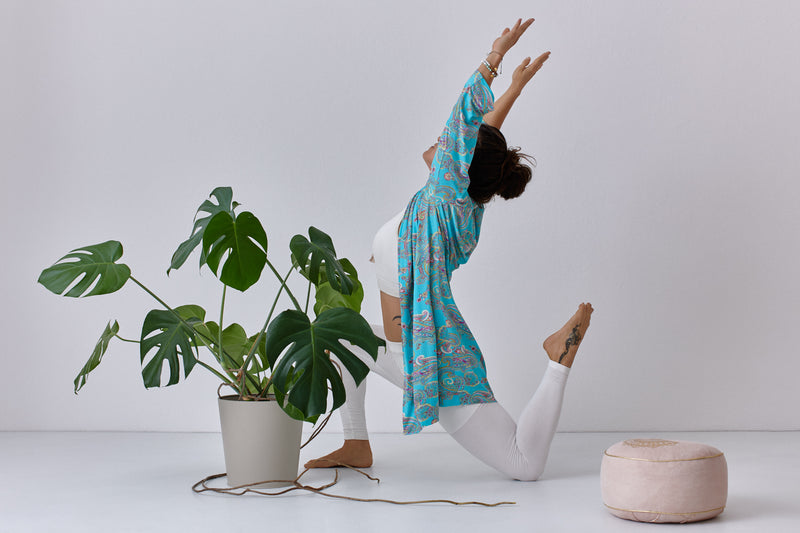
Light, preferably white
In Kundalini Yoga, white is traditionally worn, often with a turban. The light clothing is said to help feel clearer and more balanced.
Practically, this means: a looser cut, opaque material. White in thin quality quickly becomes transparent, especially when you sweat.
What makes a good waistband?
This is where most yoga pants fail. A waistband must move with you in every position without cutting in. In forward bends, in twisted seated positions, in shoulder stand.
We tested for a long time and had our models worn by yoga teachers until the cut was perfect. The result is a wide waistband that you can wear as a high-waist, which then warms your back and stomach. Folded over, it becomes a low-waistband if you get warm.
If your pants are pressing, you're thinking about your pants. That's exactly what shouldn't happen in yoga.
Which colour suits your practice?
Yoga clothing should not distract you. That's why we work with calm colours and soft lines. Nevertheless, it's worth considering the effect, as many yogis consciously choose their colours.
White stands for clarity, simplicity, and neutrality. The traditional choice in Kundalini Yoga.
Black is associated with power and strength. Timeless and unobtrusive.
Blue stands for calmness, trust, and reliability. Dark blue also appears classic.
Orange is considered the colour of meditation. In Buddhism, it's the colour of asceticism; in India, that of the Swamis.
Yellow stands for joy, energy, and an open, eager-to-learn mind.
Red is associated with passion and energy. Suitable if you're looking for strength for Power Yoga.
And what about chakra colours?
Some yogis wear the colour of the chakra they are currently working on. Chakra means wheel or vortex. The chakra doctrine originated in India and describes energy centres in the body, each vibrating in a primary colour and connected to specific body regions.
Root chakra fiery red, Sacral chakra orange, Solar plexus yellow to golden yellow, Heart chakra green and pink, Throat chakra light blue, Brow chakra indigo blue, Crown chakra violet to white.
How can you recognize ethically produced yoga clothing?
The Yamas are the ethical principles of conduct described by Patanjali in the Yoga Sutra. Ahimsa, non-violence, comes first. Those who take it seriously also consider it when shopping.
Specifically, this means: ask where the fabric comes from and where it is sewn. A label that states both has nothing to hide. For us, the fabric comes from Austria, and it is sewn in Croatia. The fibre comes from beech wood and is biodegradable; for our C2C models, this also applies to the elastane.
And for men?
The same applies one to one. Loose trousers and a relaxed shirt for calm styles, tighter cuts for dynamic ones. The only difference is practical: for men, the opacity of light-coloured trousers is even more often an issue because the fabrics are cut thinner.
Our men's yogawear is made from the same material as the women's models.
Frequently asked questions
Loose pants or leggings, which is better?
That depends on the style. Loose pants for Yin, Hatha, and Restorative; leggings for Vinyasa, Ashtanga, and anything where you move quickly or go into inversions. If you practice both, you need both.
What should I wear for my first yoga class?
Something comfortable you already own. Leggings or jogging pants and a shirt that won't slip down when you bend forward. Only buy new clothes once you know which style you prefer.
Why are leggings often transparent?
Because the fabric becomes thinner when stretched. A double layer in the crotch and hip area solves this. When buying, a simple test helps: stretch the pants over your hand and hold them against the light.
Does Modal slip on the mat?
Significantly less than polyester. The fibre surface has more grip, so knees and forearms stay where they should.
How often do I need to wash yoga clothes?
Modal absorbs odours slower than polyester, so you can wear an item more often. Machine wash at 40 degrees on a gentle cycle, do not tumble dry.